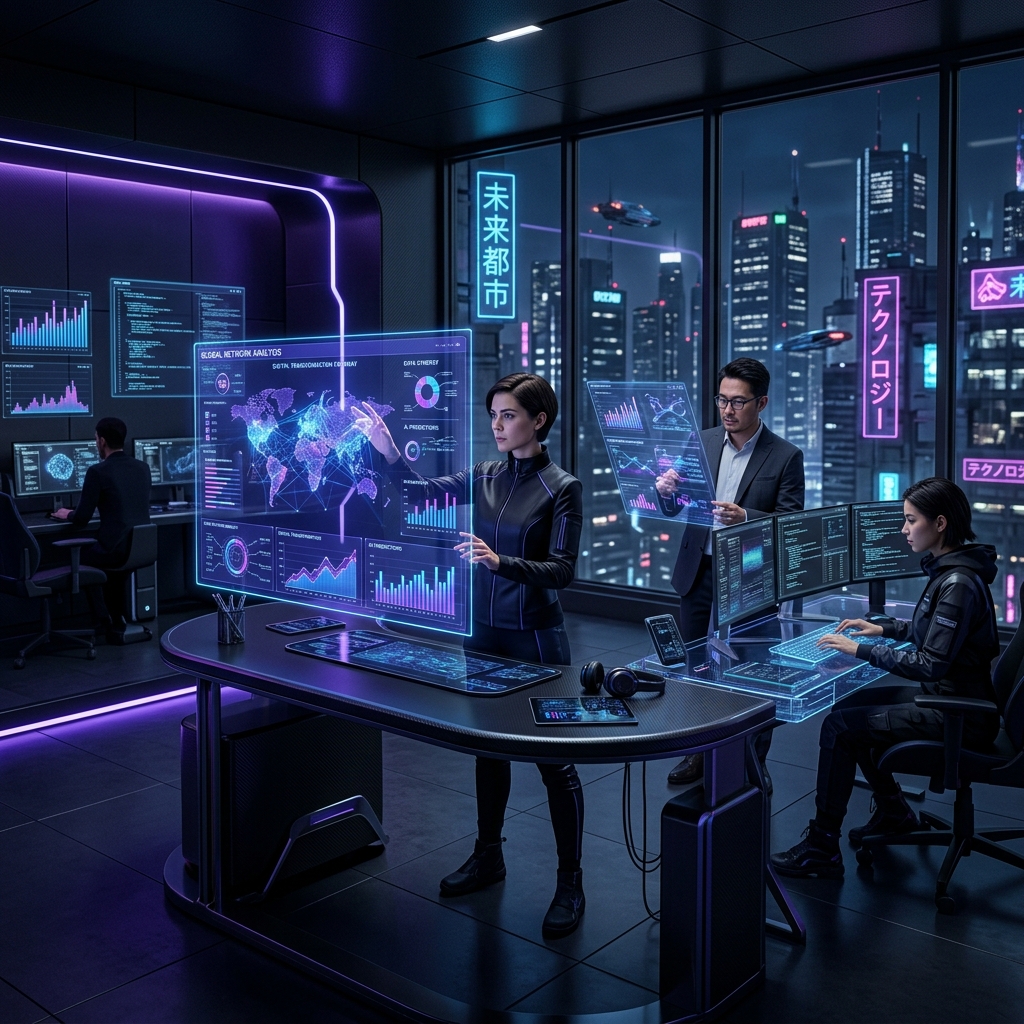
Introduction: The Metamorphosis of the Digital Economy
We are no longer just in a phase of change; we are witnessing a complete metamorphosis of the global economy. By 2026, what we call "digitization" today will be as natural as electricity. The real challenge for brands is no longer just being "online," but building authentic technological sovereignty in a hyper-connected world. Companies must understand that digital transformation is not an IT project; it requires a cultural and strategic realignment that touches every aspect of the value chain.
The speed with which new technologies such as quantum computing and generative AI are penetrating the market leaves no room for hesitation. Brands that do not lay the foundation for a scalable, AI-native infrastructure in the next 18 months risk losing touch with a new class of competitors: the "AI-First" players. In this guide, we will analyze the strategic foundations that will decide the success or failure of your brand in 2026.
“The greatest danger in times of upheaval is not the upheaval itself, but acting with yesterday's logic.”
Cognitive Interfaces and Hyper-Personalization
Personalization in 2026 means far more than just tailored product recommendations. It is about cognitive interfaces capable of understanding a user's context, emotions, and intentions in real-time. Imagine a website that changes its layout, tone, and offers not just based on who you are, but on how you feel at that moment and what your immediate goal is.
Through the deep integration of agent-driven AI into the brand ecosystem, every customer will have their own personal brand ambassador. These digital assistants are no longer simple chatbots, but autonomous units that can solve problems, make purchases, and conduct complex consulting calls. For brands, this means a massive scaling of empathy and service quality while simultaneously reducing operational costs.
Dynamic Content Assembly: Websites that reassemble themselves per millisecond.
Emotional AI: Detection of user frustration and immediate UX adaptation.
Proactive Service: Contacting the customer before they realize they need help.
Voice and gesture control as primary interaction modes.
Spatial Computing and the Immersive Web
The screen as we know it will become a window into a deeper reality in 2026. With the mass adoption of mixed reality headsets and AR glasses, the web is becoming three-dimensional. Brands must stop thinking in "pages" and start thinking in "spaces." An online shop is no longer a catalog, but an atmospheric space that the customer can enter to physically manipulate, try on, and see products in their natural environment.
Technologies like WebGL, WebGPU, and Spline already allow us to create photorealistic 3D experiences directly in the browser without installing additional apps. At Lyn Digital, we use these tools to develop interactive product storytelling that can increase conversion rates by up to 400% compared to traditional 2D images. The focus is shifting from mere information to total immersion.
Data Sovereignty and Post-Cookie Trust
The era of invasive tracking is over. In 2026, data sovereignty is a human right strictly demanded by users. Brands that attempt to collect data "behind the backs" of customers will not only be prosecuted but suffer irreversible reputation damage. The new gold is "zero-party data": data that the customer willingly shares in exchange for real added value.
Transparency is no longer a "nice-to-have," but a design principle. We support companies in implementing "privacy-by-design" frameworks where the customer maintains full control over their digital identity. By using decentralized identity solutions and blockchain technology, brands can build a level of trust that was impossible in the old Web2 world. Trust is becoming the most important competitive advantage.
Digital Environmental Protection and Green Coding
The internet consumes more energy than many industrialized nations. In 2026, sustainability is no longer a marketing slogan but a technical necessity. "Green Coding" is the new discipline of software development, where code is optimized not just for speed, but for minimal CPU load and energy consumption. Efficient code means faster loading times, which in turn directly improves SEO rankings and user satisfaction.
Use of renewable energy for hosting infrastructures.
Minimizing data transfers through intelligent caching strategies.
Avoiding resource-hungry scripts and unnecessary libraries.
Climate-neutral digital supply chains.
Redefining Work: Human & Machine
Digital transformation in 2026 affects not just the customer but, above all, internal structures. We are moving away from the "automation of tasks" toward the "augmentation of capabilities." Employees are not being replaced by AI; rather, they are being empowered by AI systems to take on more creative and strategic tasks. Brands that establish a culture of lifelong learning and train their teams in using generative tools will witness a massive boost in productivity.
Conclusion: Your Vision, Our Mission
The technological landscape of 2026 is complex, but it offers unprecedented opportunities for those willing to let go of old paradigms. It is no longer about whether you transform, but how quickly and how profoundly you do it. At Lyn Digital, we accompany you on this path – from the first strategic consultation to the technical implementation of high-end web solutions that already define tomorrow's standards today.
Are you ready to shape your brand's digital future? Let's turn the next page together and develop solutions that don't just work but inspire.